Securing professional pest control services in Nashville protects residential structures from wood-destroying subterranean insects, venomous native spiders, and invasive seasonal rodents. CoastalElm Pest Treatment focuses on clinical exterior perimeter defense and precision moisture control across Davidson County, keeping living spaces completely unsoiled and chemical-free for children and pets.
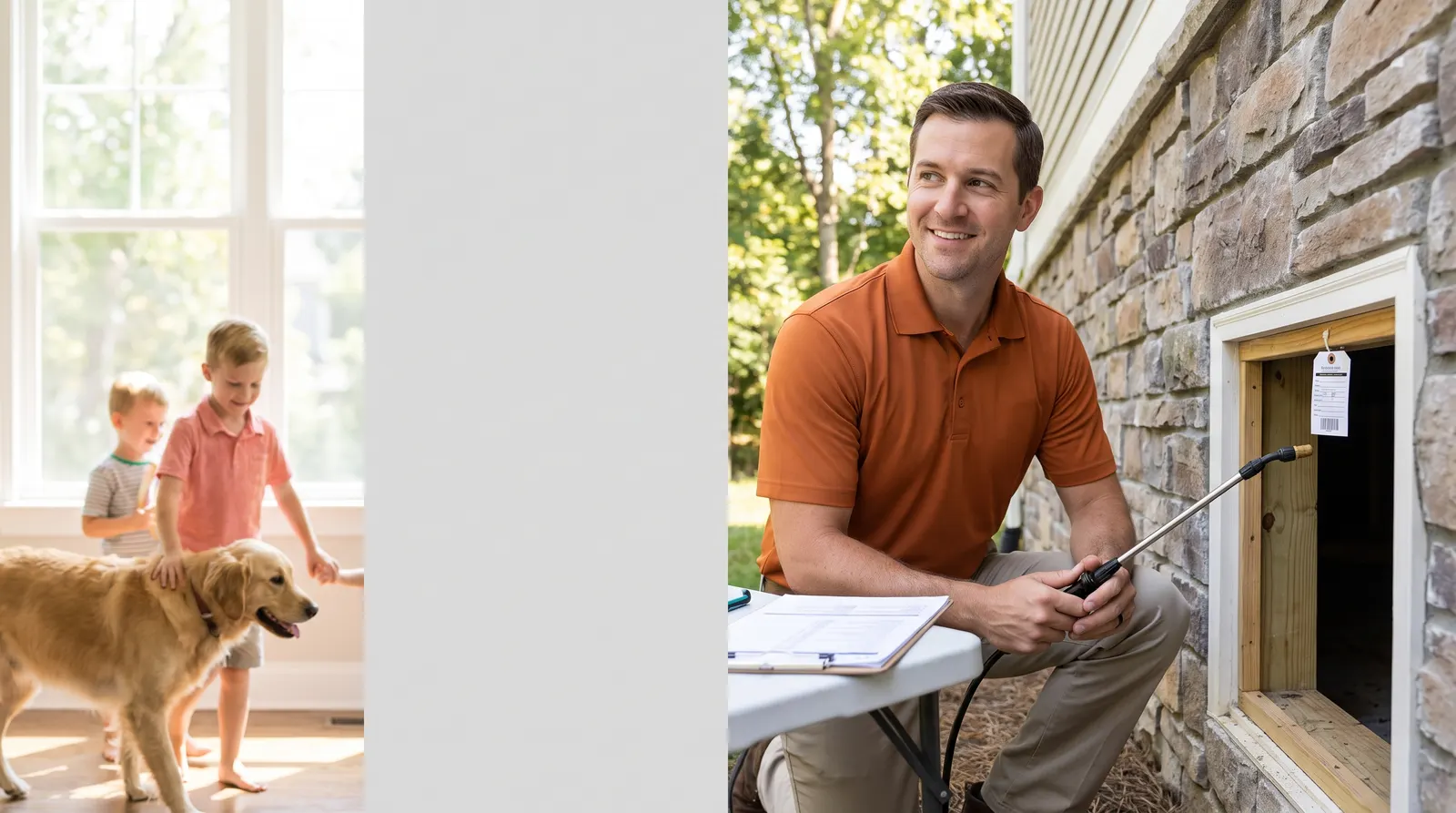
A professional provider of pest control services in Nashville is a licensed structural pest management firm that identifies local biological threats, applies targeted exterior barrier treatments, and executes mechanical exclusions to protect residential properties from pest infestations without compromising indoor family health.
Every service reflects the same meticulous attention to detail, whether it's a single job or a larger pest control services project across Nashville.
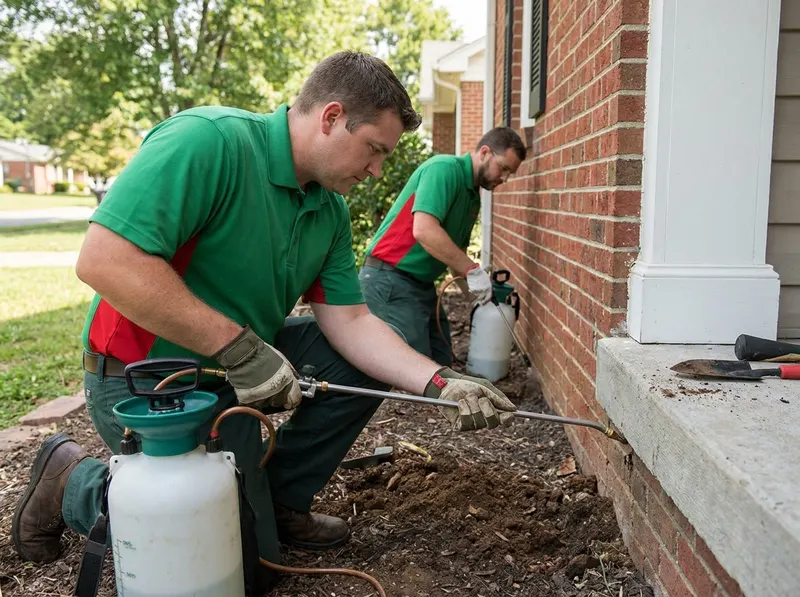
Subterranean termite management targets Eastern subterranean termites (Reticulitermes flavipes) that travel from underground colonies into residential mud sills and floor joists. Technicians install advanced non-repellent liquid soil barriers and exterior bait stations along exterior masonry perimeters in accordance with technical recommendations from the Tennessee Department of Agriculture Division of Consumer and Industry Services. This method eliminates wood-eating colonies systematically without pumping harsh airborne chemicals into finished living areas, halting silent structural wood degradation through targeted exterior soil distribution and low-profile monitoring stations positioned every 10 to 15 linear feet along the foundation perimeter.
Get a quote →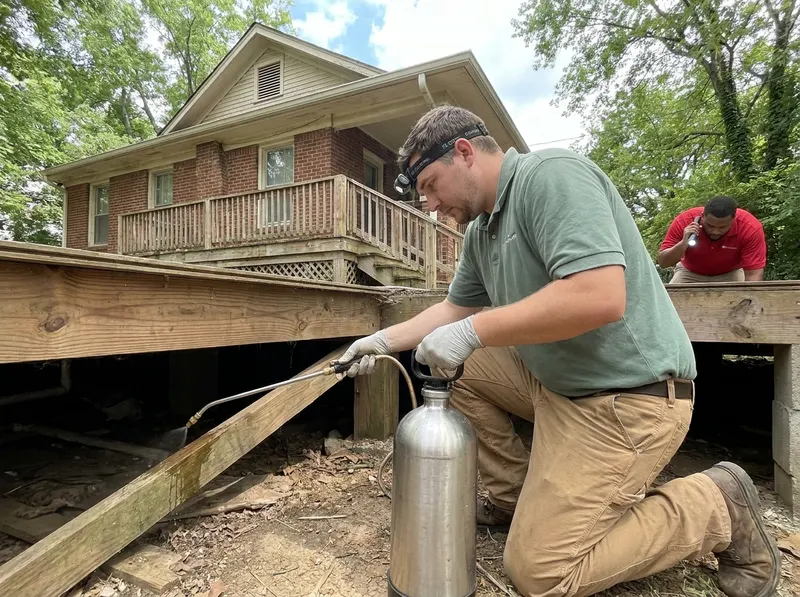
Brown recluse (Loxosceles reclusa) management focuses on structural harbor points in subflooring, attics, and dry wall voids where systemic spider activity develops. In alignment with arachnological research supported by the University of Kentucky Department of Entomology , technicians avoid broad surface chemical spraying, which merely scatters hunting spiders. Instead, field teams apply micro-porous silica dust inside wall plates, place non-toxic physical sticky monitoring grids, and seal utility penetrations to eliminate harborage points safely, effectively depleting multi-generational breeding clusters inside dead wall air spaces without contaminating household air quality.
Get a quote →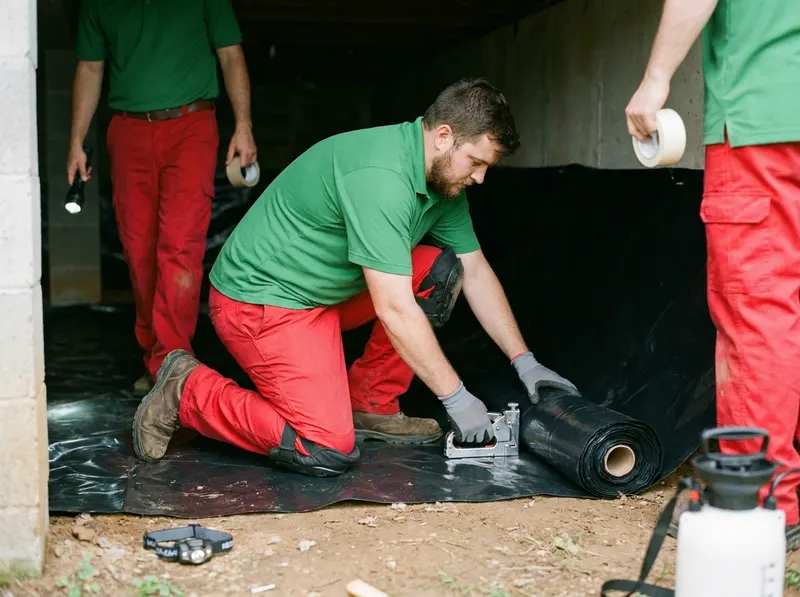
High relative humidity in unconditioned crawlspaces generates optimal colonization territory for fungal wood rot, silverfish, and moisture-loving wood-boring beetles. Service crews assess structural ground clearance, place durable 10-mil to 20-mil vapor barriers across exposed soil, and seal foundation vents to keep relative humidity strictly below 60 percent. This environmental remediation strategy draws on building durability standards established by the U.S. Department of Energy Building Technologies Office to discourage insect nesting naturally while stopping subterranean evaporative dampness from deteriorating historic floor joists.
Get a quote →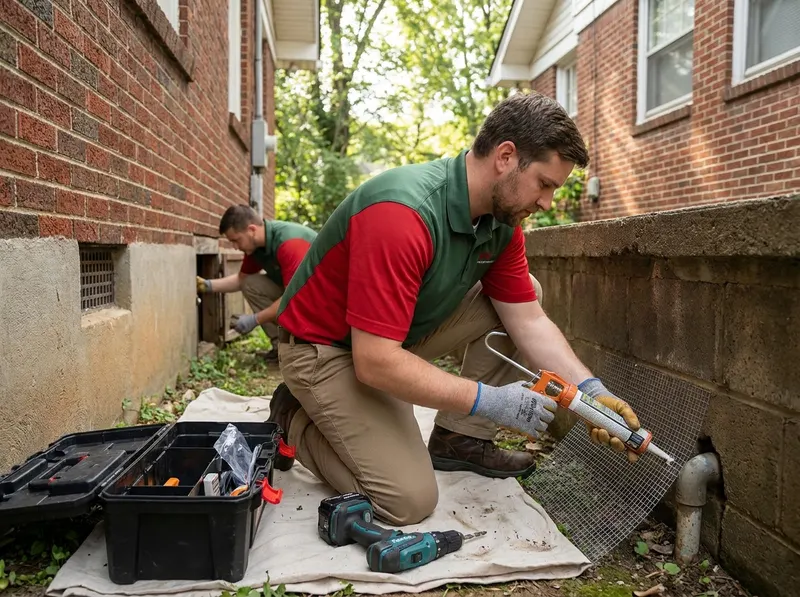
Mechanical rodent exclusion prevents Norway rats, roof rats, and house mice from entering domestic envelopes when ambient temperatures decline in autumn. Crews secure 0.25-inch galvanized hardware cloth over crawlspace vents, seal roofline gable gaps with chew-proof metals, and remove exterior harborage hazards, following disease-prevention protocols published by the Centers for Disease Control and Prevention . This physical barrier methodology eliminates the reliance on loose secondary chemical rodenticide baits that can inadvertently endanger neighborhood wildlife and family pets, establishing a permanent physical seal across all utility entry gaps exceeding a quarter-inch.
Get a quote →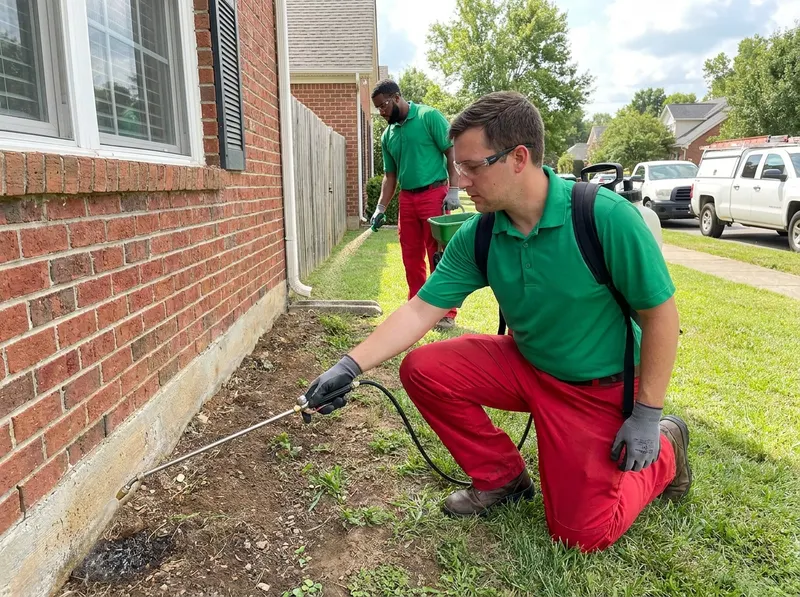
Perimeter ant management controls invasive odorous house ants and wood-nesting carpenter ants before they penetrate kitchen cabinetry and plumbing chases. Field specialists apply continuous micro-band liquid applications around the bottom 3 feet of foundation walls and 2 feet out onto surrounding soil, observing structural guidelines from the EPA Office of Pesticide Programs . This targeted band halts perimeter foraging columns without introducing airborne particulate spray into domestic eating environments, utilizing transfer-active formulations that foraging worker ants transport directly back to subterranean queens.
Get a quote →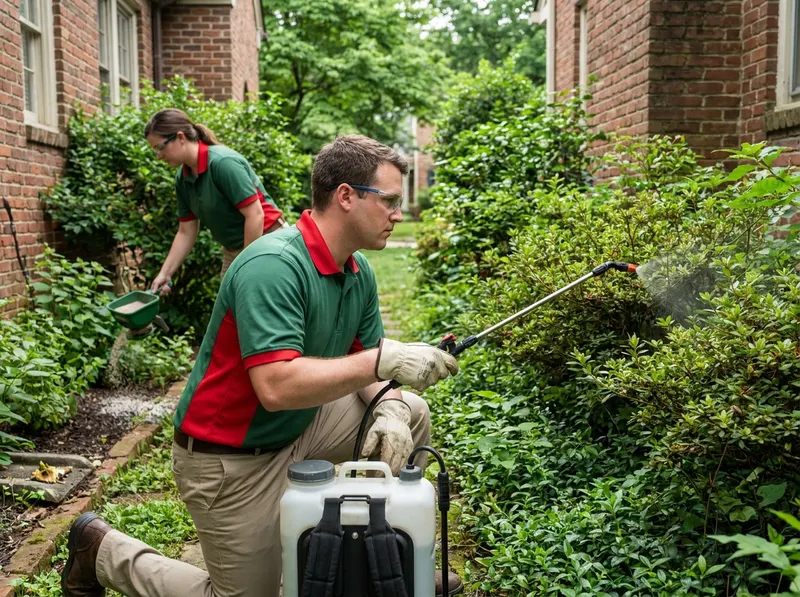
Outdoor seasonal mosquito suppression reduces invasive Asian tiger mosquitoes (Aedes albopictus) that breed in resting shade foliage and localized standing water. Technicians utilize backpack foggers to apply plant-derived pyrethrin-based mists strictly to shaded shrub undersides, while placing non-toxic Bacillus thuringiensis israelensis (BTI) bacterial briquettes in standing yard drainage basins. This combined intervention operates under guidelines established by the American Mosquito Control Association to halt insect lifecycles without threatening beneficial honeybee populations or beneficial garden pollinators.
Get a quote →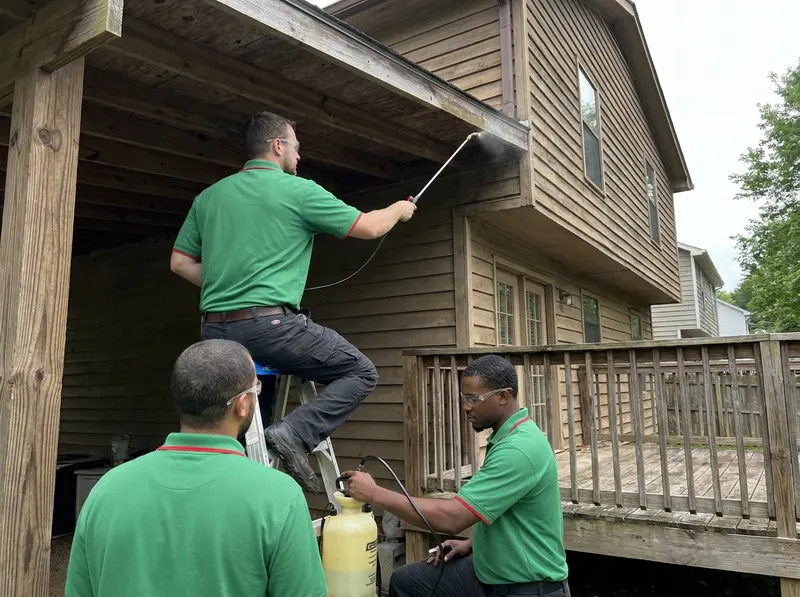
Spring emergence of carpenter bees leads to structural tunneling through unpainted cedar fascia, structural rafters, and exterior decking. Field personnel apply localized residual insecticidal dust directly into active gallery holes before plugging each tunnel with pressure-fit wooden dowels, halting recurring wood excavation. This approach conforms to structural lumber longevity protocols developed by the USDA Forest Products Laboratory , preventing costly aesthetic and structural rot over repetitive annual spring swarms while discouraging woodpeckers from shredding structural fascia boards to hunt buried larvae.
Get a quote →Exterior paper wasp, hornet, and yellow jacket removal clears painful stinging threats from roof soffits, high porch eaves, and deck railings. Technicians utilize long-reach telescopic carbon poles to introduce direct, localized micro-aerosol knockdown treatments, mechanically stripping vacated mud and paper nest structures from eaves to deter future queens. This swift mechanical removal adheres to occupational fall and safety recommendations regulated by the Occupational Safety and Health Administration , eliminating overhead stinging hazards from entryways without releasing uncontrolled chemical aerosols near children's backyard play zones.
Get a quote →You get a firm, itemized quote for your pest control services before any work begins, no surprises, no pressure.
Careful prep, tidy work, and a full cleanup when we are done. We treat your home and belongings like our own.
The same trusted, background-checked team from the first call to the final check.
Selecting structural property defense requires balancing speed of elimination, structural disruption, and household chemical exposure. If a property exhibits isolated exterior perimeter foraging by carpenter ants or seasonal odorous house ants, choosing an exterior-only micro-barrier creates a targeted defensive shield without placing treatment materials inside living spaces or around children's play areas. If an active indoor infestation of venomous arachnids such as brown recluse spiders is identified inside finished attics or subflooring, choosing precision mechanical exclusion combined with directed dust applications behind electrical wall plates and structural voids directly reaches resting pest harbors.
The trade-off between exterior-only barriers and deep void mitigation involves access requirements and execution scope: perimeter barriers take approximately 45 minutes to install along the foundation with zero interior domestic disruption, whereas deep void treatments require detailed inspections of crawlspaces and utility entries over a two- to three-hour period. For subterranean termites, homeowners choosing low-profile external bait monitoring systems gain continuous non-invasive tracking without chemical trenches around exterior patios, whereas severe active infestations within structural sill plates necessitate localized non-repellent liquid soil injections to stop structural wood destruction immediately. The trade-off is long-term sub-surface monitoring versus immediate, targeted localized ground soil disturbance.
Similarly, when handling nuisance wildlife or attic rodents, mechanical exclusion permanently closes physical entry gaps using heavy-gauge metal flashing and hardware cloth, whereas ongoing rodenticide baiting programs require recurring quarterly replenishment and risk secondary toxicity to domestic pets or non-target predatory birds.
Every project gets a firm, written price after a free on-site visit. Ranges below for orientation.
Tell us about your pest control services job and we'll send a clear, written quote, usually the same day. Or just call and talk to a real Nashville pro.
(615) 537-0359
The unique limestone karst geology underlying Davidson County creates extensive subsurface fissures, subterranean caverns, and humid pockets that harbor massive native colonies of subterranean termites and brown recluse spiders. Proximity to natural waterways such as the Cumberland River, the marshy greenways surrounding Shelby Bottoms Greenway, and heavily wooded reserves like Radnor Lake State Park drives extreme moisture inland toward residential crawlspaces. In turn-of-the-century brick bungalows in East Nashville, 1920s historic structures near Belmont-Hillsboro, and newer builds in The Nations, foundation vents frequently absorb heavy seasonal ambient humidity, creating optimal wood rot conditions that draw destructive pests into subflooring. Dense clay soils across Middle Tennessee expand significantly during spring downpours and contract sharply during August droughts, shifting residential foundations and producing microscopic hairline masonry fractures that serve as direct travel corridors for foraging pests. Historic residential properties near Centennial Park and modern builds throughout Green Hills share this structural vulnerability, as high subterranean moisture levels soften framing timber and create ideal conditions for wood-boring pests and seasonal rodent migrations into attics.
Free estimates for Nashville & the surrounding area.
 CoastalElm Pest Treatment