Subterranean termite treatment in Nashville, TN addresses the destructive nesting habits of Reticulitermes flavipes , a native pest species documented extensively by the University of Tennessee Extension . The humid…
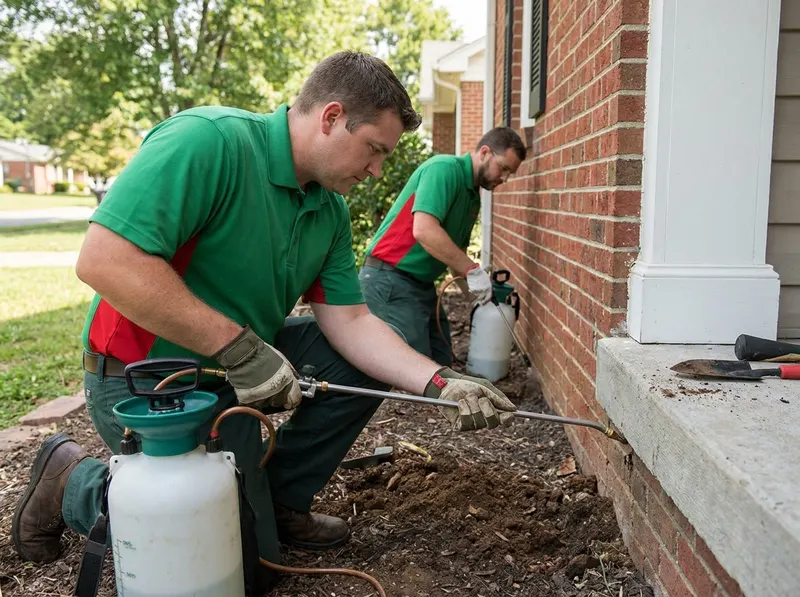
Subterranean termite treatment in Nashville, TN addresses the destructive nesting habits of Reticulitermes flavipes, a native pest species documented extensively by the University of Tennessee Extension. The humid subtropical climate across Davidson County accelerates structural moisture accumulation inside stone rubble basements, ventilated crawlspaces, and concrete slab interfaces. In historic homes located throughout East Nashville, Germantown, and Belmont-Hillsboro, elevated foundation dampness allows subterranean colonies to build subterranean shelter tubes upward into sill plates and subfloor joints. Rather than broadcasting broad-spectrum insecticides inside living areas, sustainable management relies on non-repellent liquid soil treatments registered through the U.S. Environmental Protection Agency. These formulations bind to soil particles around the exterior foundation wall, ensuring foraging worker termites walk through the active ingredient without detection and carry it directly back to the subterranean reproductive center.
Treatment selection follows strict structural parameters that account for local architectural layouts. Concrete slab foundations common in Donelson, Antioch, and The Nations often require precision rod injection along the exterior perimeter trench, preventing migration along plumbing penetrations without interior floor disruption. Pier-and-beam configurations in Sylvan Park and 12 South require dedicated crawlspace remediation. According to guidelines outlined by the National Pest Management Association, wood framing must maintain a minimum distance of six inches from bare soil to prevent subterranean bridging. When foundation soil moisture levels exceed 20%, specialized encapsulation barriers and supplemental dehumidification protocol standard to U.S. Department of Housing and Urban Development pest-mitigation standards must accompany liquid trenching to remove the damp microclimate termites need to survive.
Environmental safety remains central to modern termite barrier applications. Liquid treatments like fipronil or imidacloprid, monitored for safety standards by the National Institute for Occupational Safety and Health, remain non-volatile once bound to soil minerals, preventing vapor drift into indoor air or family living spaces. For properties adjacent to sensitive ecological sites such as Shelby Bottoms Greenway, Radnor Lake State Park, or Mill Creek, the treatment framework incorporates non-invasive external bait stations certified under PCT Online technical industry standards. The Tennessee Department of Agriculture oversees regulatory guidelines for these termiticide applications, which avoid surface run-off into local waterways through careful, calculated metering. Routine inspections every twelve months confirm barrier integrity and verify that child and pet play areas remain completely isolated from exterior trenching lines.
Accurate treatment begins with an on-site inspection of mud tubes, sagging floorboards, and pinhole drywall perforations. Following guidelines published by the Purdue University Department of Entomology, technicians measure the exact exterior running footage of the foundation wall rather than estimating generalized home square footage. Step one involves clearing mulch and pea gravel four inches back from foundation concrete. Step two consists of excavating a continuous trench six inches wide and six inches deep. Step three applies precisely calibrated gallons of liquid termiticide per ten linear feet, as specified by the product label registered with the California Department of Pesticide Regulation, followed by backfilling with treated soil. Step four installs low-profile bait stations every ten to fifteen feet across unpaved turf perimeters, providing continuous ecological defense without introducing harmful fumes into home interiors.
Every job gets a firm, written price after a free on-site visit.
Tell us about your subterranean termite treatment job in Nashville and we'll send a clear, written quote, usually the same day.
 CoastalElm Pest Treatment