Structural pest entry in Middle Tennessee is heavily accelerated by seasonal weather patterns and local architecture. During wet autumn months and humid summers near waterways like the Cumberland River or green zones…
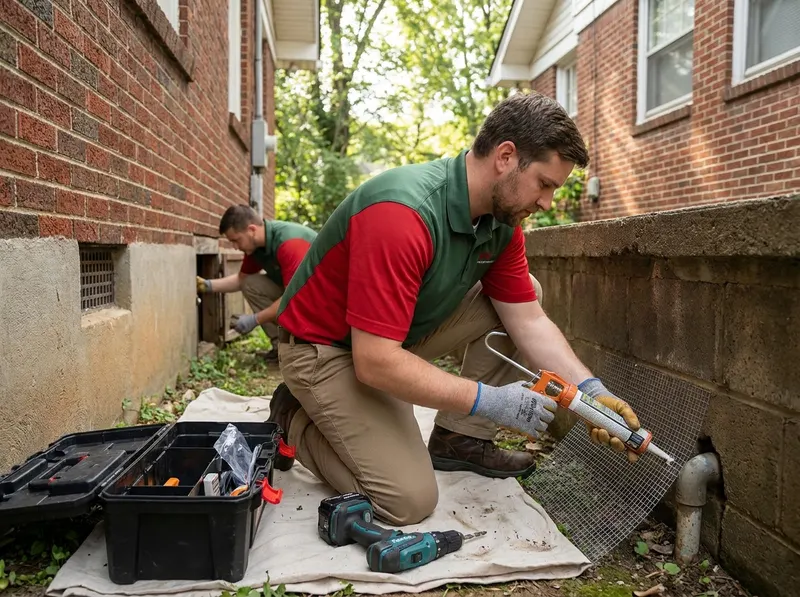
Structural pest entry in Middle Tennessee is heavily accelerated by seasonal weather patterns and local architecture. During wet autumn months and humid summers near waterways like the Cumberland River or green zones such as Shelby Bottoms Greenway, wild rodents seek dry conditions and stable nesting temperatures. Historic bungalows in East Nashville, brick residences in Sylvan Park, and modern multi-level builds in The Nations often harbor gaps along perimeter sills, crawlspace foundation vents, and roofline soffits. Rodents such as the Norway rat, roof rat, and house mouse exploit gaps as tiny as 0.25 inches. According to structural guidelines outlined by the Centers for Disease Control and Prevention, complete physical barrier exclusion serves as the only permanent, non-hazardous deterrent against re-infestation. Traditional poisons risk secondary poisoning to pets, leave carcasses inside enclosed walls, and cause foul odors that disrupt family routines. CoastalElm Pest Treatment emphasizes targeted perimeter defense to safeguard indoor air quality and protect domestic animals.
Effective defense requires an understanding of residential moisture and foundation mechanics. The Tennessee Department of Environment and Conservation monitors regional watershed conditions, which directly influence sub-floor humidity in low-lying pockets like Donelson, Inglewood, and Antioch. Damp crawlspaces beneath turn-of-the-century homes in Belmont-Hillsboro and 12 South weaken wooden rim joists, creating soft entry points and humid shelters where rodents thrive. CoastalElm Pest Treatment installs heavy-gauge 19-gauge galvanized ASTM International compliant steel hardware cloth, elastomeric sealants, and fire-rated copper mesh across weeping masonry and foundation cutouts. Sealing out wood-destroying and nesting vermin addresses the core problem at the building envelope, adhering to strict integrated pest principles established by the United States Environmental Protection Agency. The approach prevents structural chewing on electrical lines and PEX plumbing lines without leaving persistent residues inside living spaces.
Harbor remediation extends beyond the foundation walls to dismantle the microclimates vermin need for breeding. Ground brush, fallen timber, and overgrown organic groundcover near landmarks like Radnor Lake State Park and Centennial Park create natural staging areas that channel rodents straight into attic soffits and garage perimeters. To meet safety criteria guided by the Occupational Safety and Health Administration and pest remediation protocols from the National Pest Management Association, biological contamination must be carefully sanitized. CoastalElm Pest Treatment extracts soiled fiberglass insulation, clears leaf caches, and applies botanical enzymatic cleansers that neutralize pheromone scent markers. By adjusting property drainage channels under recommendations from the University of Tennessee Extension and adhering to local housing standards set by the Metro Nashville Department of Codes and Building Safety, structural stability is preserved. Homeowners achieve durable relief through passive architectural fortification rather than recurring chemical applications.
Every job gets a firm, written price after a free on-site visit.
Tell us about your rodent mechanical exclusion and harbor remediation job in Nashville and we'll send a clear, written quote, usually the same day.
 CoastalElm Pest Treatment